
Kitchen Wastage Calculator
Turn the kilos of prep waste, plate waste and spoilage into rupees, see the share of revenue lost and get targeted tips.
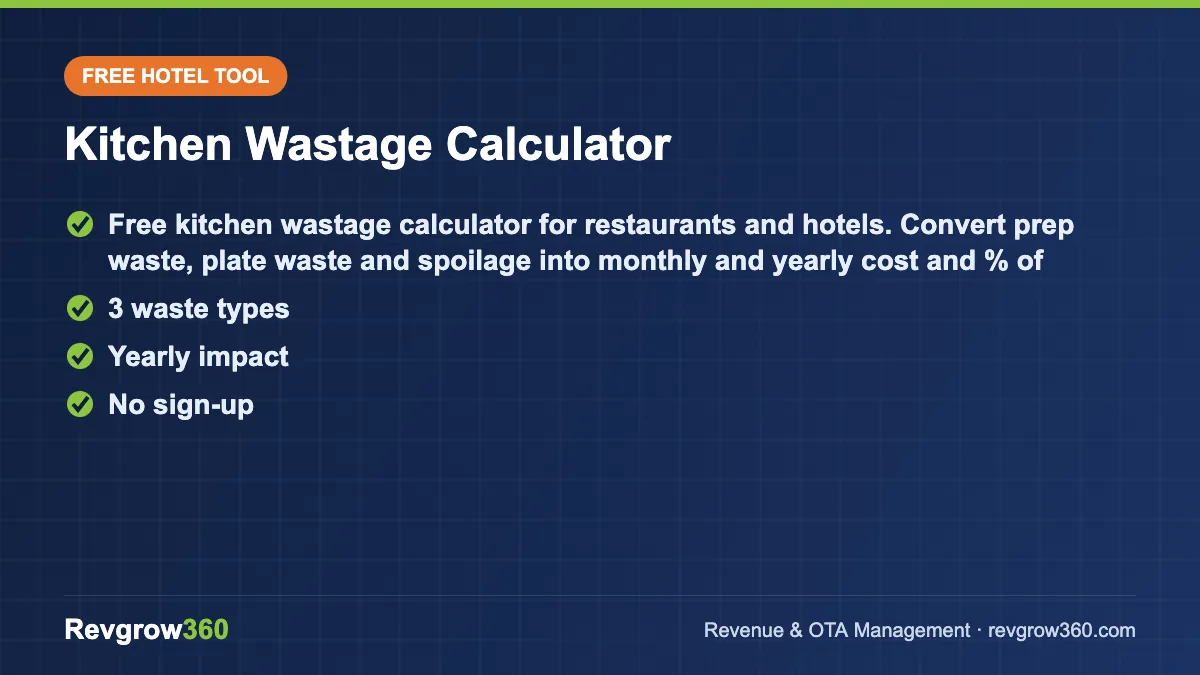
How to use the free Kitchen Wastage Calculator
- Enter your figures in the fields above – use real numbers from your PMS, channel manager or accounts.
- Tap the button to see the result instantly. Change any value to compare scenarios.
- Copy, print or save the result and use it in your daily or monthly review.
This Kitchen Wastage Calculator runs fully in your browser on mobile or desktop – no sign-up and nothing is uploaded. Free kitchen wastage calculator for restaurants and hotels. Convert prep waste, plate waste and spoilage into monthly and yearly cost and % of revenue.
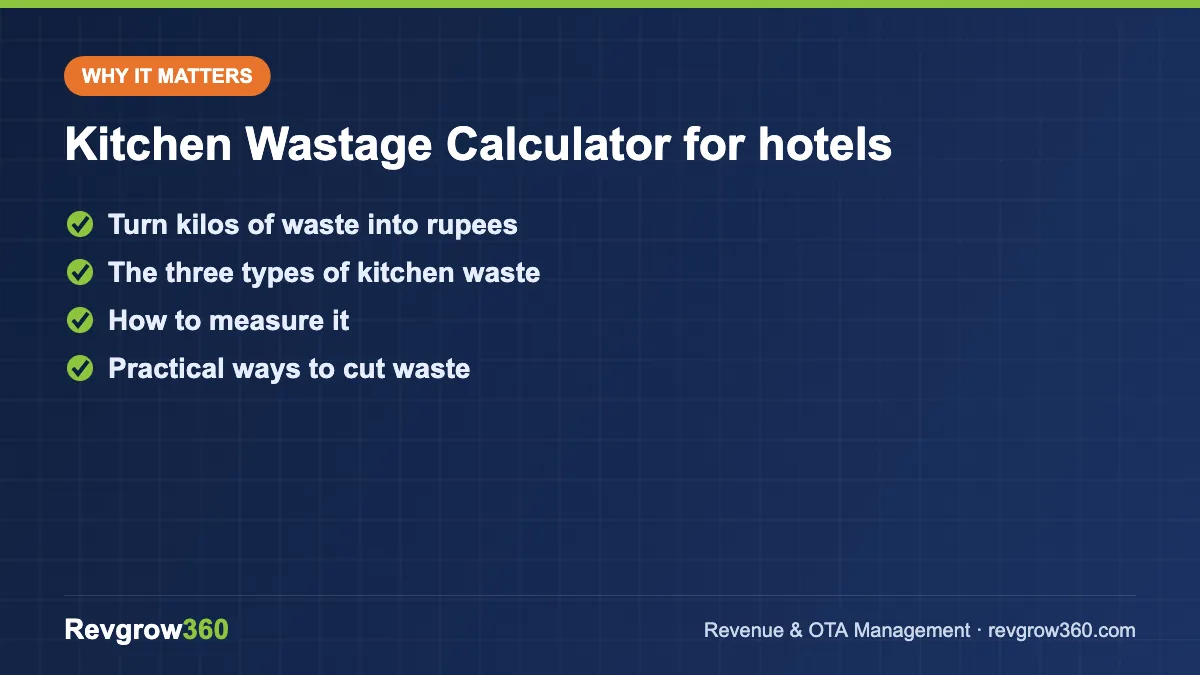
Turn kilos of waste into rupees
Every kitchen knows it throws food away, but few know what it costs. A few kilos a day sounds small; multiplied by the cost per kg and 365 days it often equals a manager's salary. This calculator splits waste into three types, converts each into rupees and shows the monthly and yearly impact against your F&B revenue.
Monthly waste cost = Daily cost × Operating days
Waste % = Monthly waste cost ÷ Monthly F&B revenue × 100
The three types of kitchen waste
- Prep waste: peels, trimmings, bones and mistakes during preparation. Its cost per kg is usually lower because much of it is inedible, but poor trimming adds up.
- Plate waste: food guests leave behind. It costs the most per kg because it has already been cooked, with oil, spices, gas and labour added. Large plate waste usually means portions are too big.
- Spoilage: items that expire, go stale or are overproduced, such as leftover gravies, cut fruit and buffet surplus.
How to measure it
Keep three labelled bins in the kitchen, one for each type. At the end of every shift, weigh each bin and write the kg in a simple register. After two weeks you have a reliable daily average to enter here. Use a blended cost per kg for each bin, for example the average ingredient cost of what usually ends up there.
Practical ways to cut waste
- Forecast covers from bookings and past sales, and produce in smaller batches.
- Follow FIFO storage with date labels on every container.
- Standardise portions with recipe cards, ladles and scales.
- Use safe trimmings in stocks, staff meals and pickles.
- Check overall performance every month with the food cost calculator; lower waste shows up directly as a lower food cost percentage.
Frequently asked questions
How do I measure food waste in a restaurant?
Keep separate bins for prep waste, plate waste and spoilage, weigh each at the end of every shift and record it. Two weeks of records give a reliable daily average.
Why is plate waste more expensive than prep waste?
Plate waste has already been cooked, so it includes ingredients, oil, spices, fuel and labour. Prep waste is often inedible trimmings with a lower value per kg.
What is a good target for kitchen waste?
There is no fixed standard. Start by measuring, then set a realistic reduction target, such as 20% to 30% over three months, and track progress weekly.
Want a revenue expert to check your numbers?
Get a free OTA, pricing and reputation audit from Revgrow360 — no obligation.