 By Md Arif Ahamed
Quick summary: A free monthly maintenance checklist for hotels covering rooms, electrical, HVAC, plumbing, lifts, kitchen, pool and public areas, with owners and frequency.
A monthly maintenance checklist for hotels is a planned list of inspections and servicing tasks that the engineering team completes every month to keep rooms, plumbing, electrical systems, HVAC, lifts, kitchens, pools and public areas working. Preventive maintenance reduces breakdowns, protects guest experience and avoids expensive emergency repairs. Use the template below, adjust it for your property and keep a signed record each month.
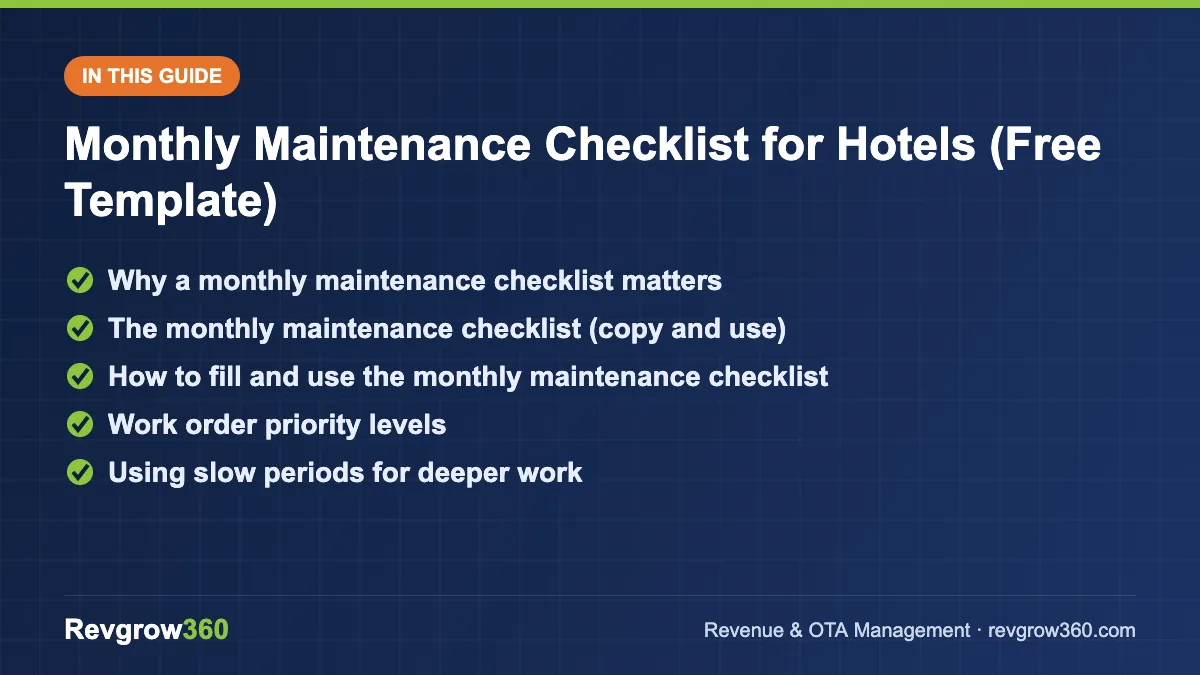
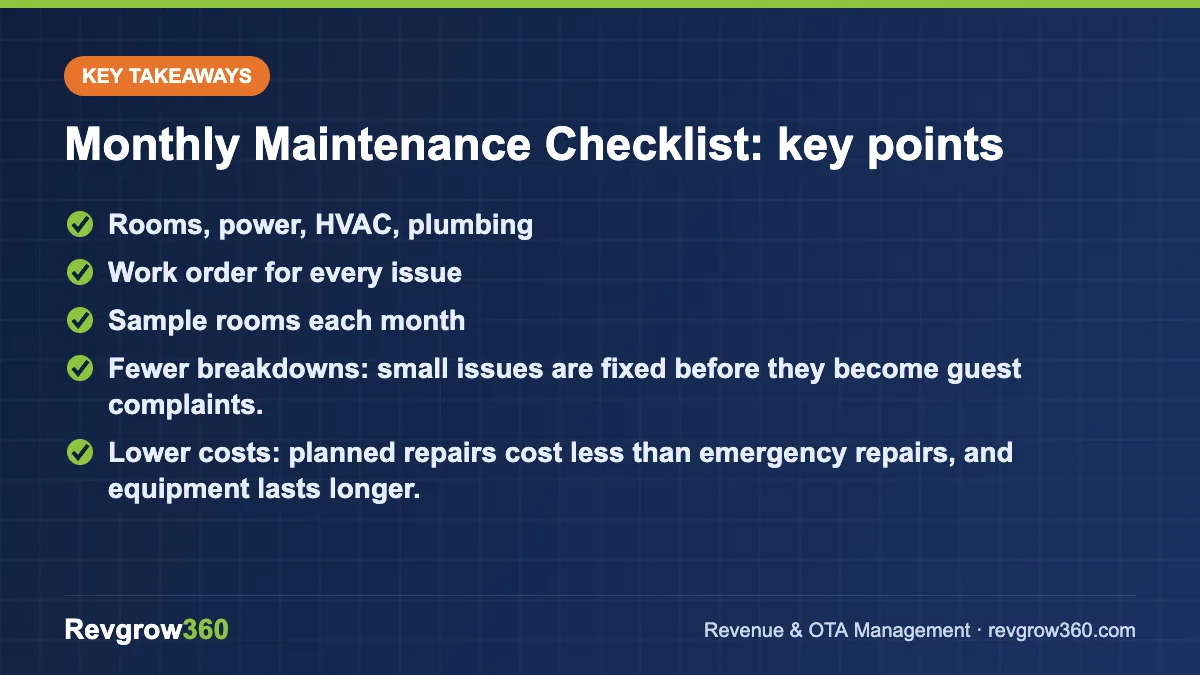
- Rooms, power, HVAC, plumbing
- Work order for every issue
- Sample rooms each month
Guests do not praise good maintenance, but they punish bad maintenance: a leaking tap, a warm AC or a broken lift shows up in reviews quickly.
Why a monthly maintenance checklist matters
- Fewer breakdowns: small issues are fixed before they become guest complaints.
- Lower costs: planned repairs cost less than emergency repairs, and equipment lasts longer.
- More rooms available to sell: rooms are not blocked for faults. See hotel occupancy rate for how out-of-order rooms reduce performance.
- Better reviews: working facilities support ratings. Read hotel online reputation management.
- Safety and compliance: regular checks keep guests and staff safe.
A preventive maintenance schedule.
The monthly maintenance checklist (copy and use)
Mark each line Done, Issue found or N/A, and record date, name and notes. Raise a work order for every issue.
1. Guest rooms (sample 20 percent of rooms each month, so all rooms are covered over five months)
| Item | Check | Status |
|---|---|---|
| AC or fan | Cooling, noise, remote, filter cleaned, drain not leaking | |
| Lights and switches | All bulbs working, switches secure, no flickering | |
| Power sockets and charging points | Working, not loose or burnt | |
| TV, remote and Wi-Fi | Channels and signal working | |
| Door lock and key card system | Smooth lock, battery level, safety latch | |
| Bathroom plumbing | Hot and cold water, flush, drains, taps and shower | |
| Geyser or water heater | Temperature, safety valve, leakage | |
| Windows, curtains and balcony doors | Lock, glide, seals, rods | |
| Furniture and fittings | Loose handles, damaged surfaces, mattress condition | |
| Walls, ceiling and floor | Damp patches, peeling paint, cracks, tiles | |
| Minibar, kettle, safe | Working and safe |
2. Electrical and power
| Item | Check | Status |
|---|---|---|
| Main panel and distribution boards | Tight connections, labelling, no heat marks | |
| Generator | Run test, fuel level, oil, battery, load transfer | |
| UPS and inverters | Battery health and backup time | |
| Earthing and surge protection | Visual check; test as per schedule | |
| Outdoor and emergency lighting | Working, timers correct |
3. HVAC and ventilation
| Item | Check | Status |
|---|---|---|
| Chillers or outdoor units | Clean coils, pressure, noise, vibration | |
| Air handling units and filters | Cleaned or replaced | |
| Exhaust fans in kitchens and bathrooms | Running, cleaned |
4. Water, plumbing and drainage
| Item | Check | Status |
|---|---|---|
| Overhead and underground tanks | Cleanliness, levels, floats | |
| Pumps | Pressure, noise, leaks, auto switch | |
| Water treatment and RO plant | Filters and quality checks | |
| Drains and grease traps | Cleaned, no blockages or odour | |
| Sewage treatment, if installed | Operation and records |
5. Lifts, kitchen, laundry and pool
| Item | Check | Status |
|---|---|---|
| Lifts | Service visit done, doors, alarm, lights, intercom | |
| Kitchen equipment | Cold rooms, fridges, burners, gas pipes, exhaust hoods | |
| Laundry machines | Washers, dryers, ironers, steam lines, safety guards | |
| Swimming pool and filtration | Pump, filter, chemical dosing, lights, drains and safety equipment | |
| Fire safety equipment | Check extinguisher tags, alarm panel and exit lights; keep the full fire audit separate |
6. Public areas, exterior and safety
| Item | Check | Status |
|---|---|---|
| Lobby, corridors and staircases | Lighting, floor, handrails, signage | |
| Washrooms in public areas | Fixtures, hand dryers, soap dispensers | |
| Parking, driveway and boundary | Lights, potholes, gates, barriers, CCTV | |
| Roof and terrace | Waterproofing, drainage, tanks | |
| Signboard and external lighting | Clean and working | |
| Pest control | Service done and records kept | |
| CCTV and access control | Cameras working, recording and storage checked |
Revenue Health Score · free
Free tool: check your hotel’s revenue health
Answer a few quick questions about your rooms, rates, OTAs and reviews. Get a score out of 100, your weakest revenue areas and the first actions to fix them.
How to fill and use the monthly maintenance checklist
- Schedule the inspection for the first week of each month, preferably on low-occupancy days.
- Assign each section to a technician and give a clear deadline.
- Coordinate with housekeeping so that rooms are accessible and available.
- Write issues on the sheet and create a work order for each, with priority and target date.
- Photograph defects and completed repairs.
- Record parts and costs for budgeting.
- The chief engineer reviews, signs and sends a short summary to the general manager.
Work order priority levels
Not every issue needs the same speed. A simple priority system keeps the team focused.
| Priority | Examples | Target response |
|---|---|---|
| Urgent (safety or guest impact) | Gas leak, electrical sparking, water flooding, lift stuck, no hot water in occupied rooms | Immediately; same hour |
| High | AC not cooling in an occupied room, door lock fault, broken toilet | Same day |
| Medium | Loose handle, flickering light, minor leak with no damage | Within 2 to 3 days |
| Low | Paint touch-up, cosmetic marks, planned upgrades | Within the month or in the next slow period |
Targets above are examples; set your own according to your size and staff.
Using slow periods for deeper work
Plan larger jobs, such as repainting, deep AC service, carpet cleaning or bathroom renovation, when occupancy is low. Look at your forecast to choose the right weeks. Our guide on hotel demand forecasting shows how to find low-demand periods. Remove rooms from sale in your PMS and channel manager before work starts, and add them back as soon as the room passes inspection, so they are not sold while still under repair.
A short, honest communication with sales and the front desk about which rooms are down and for how long prevents overbooking and guest disappointment.
Spare parts and vendor list
Keep a small stock of common spares: bulbs, switches, tap washers, flush valves, door lock batteries, AC filters and remote controls. Maintain a list of reliable vendors for lifts, AC, generator, kitchen equipment, pest control and electrical work with phone numbers and response times. A fast vendor response can decide whether a fault takes hours or days to fix.
Seasonal checks to add
Add extra lines before the monsoon, summer and winter: roof waterproofing and drains before heavy rain, AC and chiller servicing before the hot months, and geyser and heater checks before winter. In hill stations, check water pipes for freezing and generators for cold-weather starting.
Budgeting and records
Record repair cost by room and by system. After a few months you will see which rooms or machines cost the most. Use this to decide when to replace instead of repair, and to prepare an annual maintenance budget. Many hotels plan a percentage of revenue for maintenance and renewal, but the right level depends on the age and type of building, so base your number on your own records.
Frequency and owner
| Task type | Frequency | Owner |
|---|---|---|
| Daily rounds (lobby, restaurants, plant rooms) | Daily | Duty engineer |
| This monthly checklist | Monthly | Chief engineer |
| Deep servicing of HVAC, pumps, lifts | Quarterly or as per supplier | Chief engineer with vendors |
| Annual plan and budget | Yearly | General manager and chief engineer |
Common errors with maintenance checklists
- Tick-box exercise with no real inspection.
- Issues recorded but no work order or follow-up.
- Leaving the busiest rooms until last, then never checking them.
- No spare parts stock for common faults.
- No link between maintenance and housekeeping, causing rooms to be sold with defects.
- Ignoring small leaks and damp, which become expensive.
- No record of costs, so you cannot judge repair versus replace.
Track maintenance KPIs, such as out-of-order room nights and average repair time, alongside your hotel KPIs.
Getting housekeeping and front office involved
Room attendants see faults before anyone else. Give them a simple way to report problems, such as a mobile message group or a defect sheet on the trolley, and make sure each report receives an answer. Front office should also log guest complaints about maintenance and share them with engineering every morning. This feedback loop is a quiet but powerful part of the monthly routine.
Key takeaways
- A monthly maintenance checklist covers rooms, electrical, HVAC, plumbing, lifts, kitchens, pool and public areas.
- Sample a share of rooms every month so all rooms are covered over time.
- Turn every issue into a work order with an owner and a date.
- Review results monthly and plan deep servicing quarterly.
Keeping rooms available and in good condition protects both ratings and revenue. Explore Revgrow360’s hotel revenue management service or book a free consultation.
For more background, see this checklist method on Wikipedia.
Frequently asked questions
What should a monthly maintenance checklist for a hotel include?
It should include guest rooms, electrical and power, HVAC, water and plumbing, lifts, kitchen and laundry equipment, pool, public areas, exterior, pest control and CCTV. Each issue needs a work order with an owner and a target date.
Who is responsible for hotel maintenance checks?
The chief engineer owns the monthly checklist and assigns sections to technicians. Duty engineers do daily rounds, housekeeping reports room faults, and the general manager reviews monthly summaries and approves budgets.
How many rooms should be inspected each month?
Many hotels inspect a sample, such as 20 percent of rooms each month, so all rooms are covered over five months. Rooms with repeated complaints or older fittings may need more frequent checks.
How does maintenance affect hotel revenue?
Faults can force rooms out of order, reducing sellable inventory, and poor facilities lead to bad reviews and lower conversion. Preventive maintenance keeps rooms available, supports ratings and reduces emergency repair costs.
More Hotel Checklists & Formats guides
Fire Safety Audit Checklist for Hotels (Free Template)
A copy-ready fire safety audit checklist for hotels covering alarms, equipment, exits, electrical, kitchens and training.
Banquet Event Checklist for Hotels (Free Template)
A copy-ready banquet event checklist with owners and deadlines for every stage, from booking to post-event feedback.
Kitchen Closing Checklist for Hotels (Free Template)
A copy-ready kitchen closing checklist for hotels covering food storage, gas and equipment shutdown, cleaning, waste, stock and sign-off.
Restaurant Opening Checklist for Hotels (Free Template)
A copy-ready restaurant opening checklist for hotel outlets covering staff, tables, kitchen, buffet and safety, with timings and owners.
VIP Room Setup Checklist for Hotels (Free Template)
A copy-ready VIP room setup checklist with owners, timeline and personalisation ideas so every important guest gets a consistent welcome.
Guest Arrival Checklist for Hotels (Free Template)
A copy-ready guest arrival checklist covering pre-arrival, welcome, registration, room handover and follow-up, with owners and timing standards.
Related guide: Front Office Opening Checklist for Hotels (Free Template)
Free PDF checklist
Where is your hotel losing money?
27 quick checks on pricing, OTAs, reviews and direct bookings, with the first fix for every leak.
Get the free checklist →