 By Md Arif Ahamed
If you sell rooms on more than one website, you have probably lived through the nightmare of an overbooking: the last deluxe room sells on Booking.com at 9:02 pm, and another guest books the same room on MakeMyTrip at 9:04 pm because nobody updated the inventory in time. A hotel channel manager exists to stop exactly that. It is the software that connects your property to every online travel agency (OTA), your website booking engine and often the GDS, so that rates, availability and restrictions stay in sync everywhere, automatically. This guide explains what a channel manager is, how it works behind the scenes, what to look for when choosing one and how to set it up without mistakes.
- One dashboard for every OTA
- Real-time rate and room sync
- Fewer overbookings, less admin
What is a hotel channel manager?
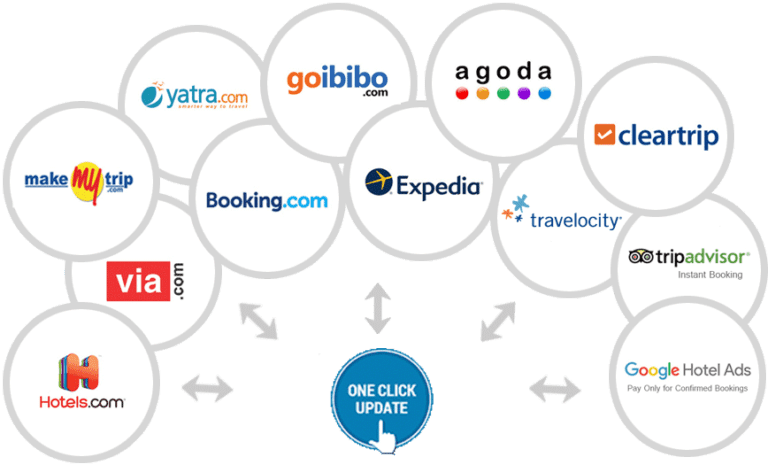
A hotel channel manager is a cloud-based tool that sits between your property management system (PMS) and your distribution channels. Instead of logging into five or ten extranets every time you change a price or close a room type, you make the change once in the channel manager and it pushes the update to every connected channel within seconds. When a booking arrives from any channel, the channel manager reduces the available inventory everywhere else.
In simple terms, it does three jobs:
- Inventory sync — one shared pool of rooms across all channels, so a sale on one site is reflected on all others.
- Rate distribution — one place to set and update prices, rate plans, meal plans and restrictions.
- Reservation delivery — bookings, modifications and cancellations from all channels flow into one dashboard and, if integrated, straight into your PMS.
Score your OTA listing and get the top fixes.
How a channel manager works, step by step
Most modern channel managers use two-way XML or API connections with the OTAs. Here is what happens in a typical cycle.
1. Mapping
Each OTA has its own room type and rate plan IDs. During setup, you “map” your internal room types (for example, Deluxe Double, Premium Sea View) and rate plans (Room Only, Breakfast Included, Non-Refundable) to the matching codes on each OTA. Correct mapping is the foundation of everything; a wrong map can push a suite price onto a standard room.
2. Pushing rates and availability (ARI)
ARI stands for Availability, Rates and Inventory. When you update ARI in the channel manager, it sends the change to every mapped channel. Restrictions travel with it: minimum length of stay, closed to arrival, closed to departure and stop-sell.
3. Receiving bookings
When a guest books on an OTA, the OTA sends the reservation to the channel manager. The channel manager deducts one room from the shared pool and pushes the new availability to all other channels. If you have a PMS integration, the booking is created in the PMS automatically with guest details, rate and payment information.
4. Handling changes
Modifications and cancellations follow the same path. A cancellation releases the room back into the pool and updates every channel.
Pooled inventory vs allocated inventory
Older setups gave each OTA a fixed allotment, such as three rooms to one site and two to another. The problem is obvious: one channel sells out while another sits on unsold rooms. A good channel manager uses pooled (shared) inventory, where every channel sells from the same total. This alone usually lifts occupancy for properties that were previously splitting rooms manually.
| Task | Without a channel manager | With a channel manager |
|---|---|---|
| Changing a rate on 6 channels | Log into 6 extranets, 20–40 minutes | One update, pushed in seconds |
| Inventory control | Manual allotments per OTA | Single shared pool |
| Overbooking risk | High during busy periods | Low, if mapping and sync are correct |
| Rate parity | Easy to drift between channels | Easier to keep consistent |
| Reservations | Emails and extranet checks | One dashboard, auto-import to PMS |
| Adding a new OTA | Another login to manage daily | Map once, manage centrally |
Channel manager vs PMS vs booking engine
These three tools are often confused, and many vendors bundle them.
- PMS runs your hotel operations: check-in, check-out, room status, folios, invoices and housekeeping.
- Booking engine is the reservation widget on your own website that takes commission-free direct bookings.
- Channel manager distributes your rates and inventory to third-party channels and brings bookings back.
The ideal setup connects all three, so the booking engine is treated as just another channel sharing the same inventory pool. If you are still choosing tools, our guide to the best channel manager for hotels compares what matters, and a well-built hotel booking engine completes the direct side.
Key features to look for in a hotel channel manager
- Two-way, real-time connectivity with the channels you actually sell on — in India that usually means Booking.com, MakeMyTrip/Goibibo, Agoda, Expedia, Airbnb and a few regional players.
- Certified connections rather than screen-scraping. Certified XML/API connections are faster and more reliable.
- PMS integration so bookings flow into operations without re-typing.
- Rate rules and derived rates — for example, Breakfast plan = Room Only + ₹500, or Non-Refundable = Flexible − 10%. This saves hours and prevents errors.
- Bulk update calendar to change rates for date ranges, weekdays and seasons in one go.
- Restriction control per channel and per date: MLOS, CTA, CTD, stop-sell.
- Booking and sync logs, so you can trace exactly what was sent and when if something goes wrong.
- Reporting on channel mix, booking pace and cancellations.
- Responsive local support, ideally available during your peak booking hours.
Worked example: a 40-room hotel in Goa
Consider a hypothetical 40-room beach hotel in Goa with three room types: 24 Standard, 12 Deluxe and 4 Suites. It sells on four OTAs plus its own website.
Before: the front office manager gave each OTA a fixed allotment of Standard rooms (6 each) and kept the rest for walk-ins and the website. On a December weekend, one OTA sold out its 6 rooms by Tuesday while another still had 4 unsold by Friday. Meanwhile, a rate change for New Year took most of a morning to update across all extranets, and one OTA was missed, so it continued selling at the old, lower price.
After: with a channel manager, all 24 Standard rooms sit in one pool. Whichever channel brings demand first gets the booking. The New Year rate is set once with a three-night minimum stay, and the change appears on every channel within minutes. The website booking engine shares the same pool, so a direct booking also closes availability on the OTAs.
The practical gain is not just time saved. It is fewer missed sales, fewer overbookings and a consistent price on every channel, which protects your ranking and your reputation.
How to set up a channel manager correctly
- Audit your current listings. Make sure room names, room counts, occupancy and meal plans are consistent across every OTA before you connect anything.
- Define your rate structure. Decide a base rate (Best Available Rate) and derive other plans from it with clear rules.
- Request connection on each OTA. Most OTAs require you to activate the channel manager from inside their extranet.
- Map room types and rate plans carefully. Double-check maximum occupancy and child policies.
- Load rates and availability for 12 months ahead, including restrictions and closed dates.
- Run test bookings where the OTA allows, and verify that inventory drops on all other channels.
- Switch off manual extranet updates. Once connected, update only in the channel manager; manual changes in an extranet can be overwritten or cause mismatches.
- Check sync logs daily for the first two weeks.
Common mistakes that cause overbookings
- Leaving one OTA unmapped or on “allocation” mode while others use the shared pool.
- Updating rates directly in an OTA extranet after connecting the channel manager.
- Selling the same physical rooms under two different room types without linking them.
- Forgetting to close rooms that are blocked for maintenance or offline group bookings.
- Not entering walk-in and phone bookings into the PMS, so the pool still shows rooms as available.
Does a small hotel or homestay need a channel manager?
If you sell on only one OTA and your website, you can manage manually for a while. Once you are on two or more OTAs, the time cost and overbooking risk usually justify a channel manager, even for a 6–10 room homestay. Pricing typically depends on the number of rooms and channels, with monthly subscription plans being the most common model. Compare the cost against one overbooking relocation or a few hours of staff time each week, and the decision is usually clear.
How a channel manager supports revenue management
A channel manager is not a revenue strategy by itself, but it makes one possible. Dynamic pricing only works if you can change rates quickly and accurately across all channels. Length-of-stay controls on peak dates, last-minute price drops, and early-bird offers all depend on fast, reliable distribution. Combined with a clear hotel revenue management process, it turns pricing decisions into actual bookings.
Key takeaways
- A hotel channel manager syncs rates, availability and restrictions across all OTAs and your website from one dashboard.
- Pooled inventory removes the need for fixed OTA allotments and reduces both overbookings and unsold rooms.
- Correct room and rate mapping is the most important part of setup.
- Connect the channel manager with your PMS and booking engine for a single source of truth.
- After connecting, stop making manual changes in OTA extranets.
- Even small properties on two or more OTAs usually benefit from one.
Choosing, connecting and mapping a channel manager is where many hotels lose weeks of revenue to avoidable errors. The Revgrow360 team has supported 500+ hotels with channel setup, OTA mapping and daily rate management. If you would like a second pair of eyes on your distribution setup, explore our OTA management services or book a free consultation.
Frequently asked questions
What does a hotel channel manager do?
A hotel channel manager connects your property to OTAs, your booking engine and other channels. It pushes rates, availability and restrictions to all of them from one dashboard, and when a booking comes in from any channel it reduces inventory everywhere else. This prevents overbookings and saves hours of manual extranet updates every week.
Is a channel manager the same as a PMS?
No. A PMS runs daily hotel operations such as check-in, check-out, billing and housekeeping. A channel manager handles distribution to OTAs and other channels. Many vendors offer both in one package, and the best setup integrates them so bookings from any channel flow straight into the PMS without manual entry.
Do small hotels and homestays need a channel manager?
If you sell on only one OTA, you can manage manually. Once you list on two or more OTAs, the risk of overbooking and the time spent updating extranets usually make a channel manager worthwhile, even for a 6 to 10 room property. Most providers offer monthly plans based on room count and channels.
Can I still update rates in the OTA extranet after connecting?
It is best not to. Once a channel manager is connected, it should be the single place where you change rates and availability. Manual changes in an OTA extranet can be overwritten at the next sync or create mismatches between channels, which can lead to parity issues or overbookings.
More OTA Management guides
How to List Hotel on Yatra: Step-by-Step Guide
A step-by-step guide to listing your hotel on Yatra, with documents, onboarding steps, pricing after commission and tips for more bookings.
How to List Hotel on Goibibo: Step-by-Step Guide
A step-by-step guide to listing your hotel on Goibibo, with documents, content, rate setting and tips to get your first bookings.

OTA full form in hotel
OTA full form hotel- What an OTA? An online travel agency (OTA) a web-based marketplace that allows consumers to research and book travel products…
How To Increase OTA Bookings For Hotels
11 effective ways To Increase OTA Bookings..? Dear Friend We Will teach you 11 effective ways How To Increase OTA Bookings..? OTA…

Best OTA Management Company for Hotels
OTA Management Company is a hotel management company that offers hoteliers a wide range of services. We provide a comprehensive suite of…

What is the role of an Online Travel Agency?
What is an OTA? An online travel agency (OTA) is web-based marketplace that allows consumers to research and book travel products and…